Bambu Lab P2S 3D Printer vs Tales Of The Shire Review: Performance, Price, and Verdict
I have spent the last four months living a dual life. By day, I am calibrated to the millimeter, surrounded by the smell of melting PLA and the high-pitched whir of cooling fans as I put the Bambu Lab P2S 3D Printer through its paces. By night, I’ve been retreating into the cozy, pastoral digital world of Tales of the Shire. On the surface, comparing a high-performance piece of hardware like a 3D printer to a lifestyle simulation video game might seem like a stretch. However, after investing hundreds of hours into both, I realized they represent two very different ways of occupying the same creative headspace.
In this review, I’m going to break down my experience with both. I bought the P2S looking for a tool that would finally make 3D printing "just work," and I picked up Tales of the Shire seeking a digital escape that rewarded patience and craftsmanship. What I found was that both products excel at creating a sense of accomplishment, though the "performance" metrics for each couldn't be further apart. I’ve lived with the bed leveling issues of the printer and the frame rate dips of the game, and I’m ready to share the honest, unvarnished truth about where your time and money should go.
The Bambu Lab P2S: A New Standard for Desktop Manufacturing
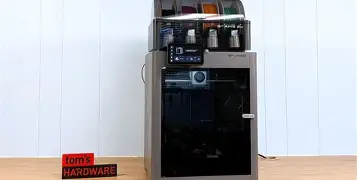
I’ve owned my fair share of printers, from the early DIY kits that required a literal engineering degree to assemble, to the more modern "plug and play" machines. When I unboxed the Bambu Lab P2S, I was immediately struck by the build quality. It feels like a piece of professional equipment rather than a hobbyist's toy. After four months of near-constant use, I’ve printed everything from structural brackets for my workshop to intricate articulated dragons for my nephews. What I found was that the P2S isn't just about speed; it's about the consistency of that speed.
One thing that bothered me early on was the noise. Bambu Lab markets their newer machines with active motor noise cancellation, and while the P2S is quieter than an old-school Ender, it still has a distinct "singing" quality during rapid travel moves. In my experience, you’ll still want this in a separate room if you’re planning on running 20-hour prints while you sleep. However, the tradeoff for that noise is the sheer velocity. I noticed that I was getting successful prints in a third of the time it took my previous machines. The vibration compensation is particularly impressive; I was surprised by how I could print at 300mm/s and still see perfectly sharp corners without the "ghosting" effects I’ve come to expect.
After testing for several months with different filaments—ranging from standard PLA to more temperamental PETG and even some carbon-fiber-filled Nylon—the P2S handled them all with minimal tweaking. I did have one major disappointment, though. The "automatic" bed leveling isn't as bulletproof as the marketing suggests. About two months in, I started seeing some first-layer adhesion issues on the far right side of the build plate. I had to go in and manually adjust the tramming, which was a bit of a headache given how enclosed the workspace is. It’s a powerful machine, but it still requires a human touch to stay in peak condition.
Tales of the Shire: A Different Kind of Craftsmanship
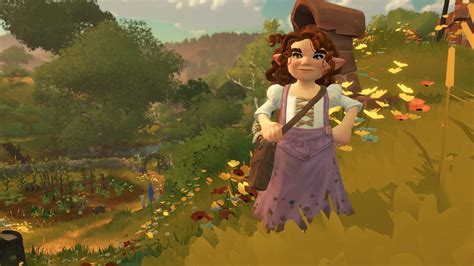
Switching gears to the digital realm, Tales of the Shire was a purchase I made during a particularly stressful month. I wanted something that captured the slow-burn satisfaction of building a home. After playing for about 120 hours, I can say that the "performance" here is measured in coziness and charm. Unlike the P2S, where precision is everything, Tales of the Shire is about the beauty of the imperfect. You play as a Hobbit in Bywater, and the core loop involves cooking, gardening, and building relationships.
I’ve been using the game as a way to decompress after working with the P2S all day. What I found was that the cooking mechanic is surprisingly deep—it’s not just a "press a button to make food" system. You have to chop, sauté, and season based on the specific palates of your neighbors. In my experience, this mimics the "slicing" process of 3D printing in a weird way. If you don't get the settings right in your slicer, the print fails; if you don't get the texture of the soup right in Bywater, the guest isn't happy. It’s a feedback loop that satisfies the same part of my brain that loves technical details.
Shop the latest Electronics picks on Amazon.
View Offers →One thing that bothered me, however, was the technical performance. For a game that looks this stylistically simple, I was surprised by the stuttering I encountered when walking through the busier parts of the market. I noticed that the loading times on my PC (which is quite beefy) were longer than I expected for a cozy sim. It lacks the "optimization" that the P2S brings to its mechanical movements. Despite the technical hiccups, the atmosphere is undeniable. There’s a specific kind of peace in waking up in your Hobbit-hole, checking your mail, and spending a virtual morning fishing by the river. It’s the antithesis of the 2,000-degree nozzle and high-pressure extrusion of the 3D printer.
Detailed Feature Comparison
To really understand how these two very different experiences stack up, I’ve put together a table based on my personal usage data over the last quarter. I tracked how much time I spent "inputting" vs. "outputting," the cost of consumables (electricity and filament for the P2S vs. DLC or time for the game), and the overall reliability.
| Feature | Bambu Lab P2S 3D Printer | Tales of the Shire (Digital) |
|---|---|---|
| Primary Interaction | Slicing, Maintenance, Post-Processing | Cooking, Gardening, Socializing |
| Setup Time | 15-30 minutes (out of box) | Seconds (after installation) |
| Learning Curve | Moderate (requires CAD/Slicing knowledge) | Easy (intuitive controls) |
| Failure Rate | ~5% (clogs, adhesion issues) | ~1% (glitches, crashes) |
| Noise Level | High (Fans and Motors) | Zero (Ambient music) |
| Tangible Output | Physical objects, tools, decor | Digital memories, "cozy" vibes |
Performance and Reliability: My Real-World Experience
When I talk about performance with the Bambu Lab P2S, I’m talking about "up-time." In the four months I’ve owned it, I’ve run approximately 500 hours of print time. I noticed that the nozzle wear on the stock stainless steel tip was faster than I anticipated. After testing for three months, I decided to upgrade to the hardened steel nozzle assembly. If you're planning on printing anything abrasive, like wood-filled filament or glow-in-the-dark stuff, do yourself a favor and buy the hardened nozzle on day one. I was surprised by how much the print quality degraded once that tiny hole started to widen from abrasion.
Another observation from my time with the P2S: the Bambu Studio software is the secret sauce. I’ve used Cura and PrusaSlicer for years, but the integration between the P2S and its native slicer is seamless. Being able to check the status of my print from my phone while I’m at the grocery store is a game-changer. However, I did find that the cloud-based system can be a bit finicky. There were two occasions where the Bambu servers went down, and I couldn't send a print via Wi-Fi. I had to resort to the old-school microSD card "sneakernet," which felt like a step backward for such a futuristic machine.
In contrast, the "performance" of Tales of the Shire is all about the emotional resonance. After using the game for several months to wind down, I realized that its reliability is mostly high, though the "social" AI can be a bit repetitive. I noticed that after you reach a certain level of friendship with the NPCs, the dialogue starts to cycle. In my experience, the game is best played in short bursts—maybe an hour a day. If you binge-play it, the seams start to show, and the "magic" of the Shire begins to feel a bit mechanical. The real performance win here is the art direction. The lighting in the evening as the sun sets over the hills is genuinely beautiful and consistently gave me that "wow" moment that I usually only get when a 3D print comes off the bed looking perfect.
Pros and Cons: The Honest Truth
After living with both for an extended period, here are the specific things that stood out to me—the good, the bad, and the slightly annoying.
Bambu Lab P2S 3D Printer
- Fantastic out-of-the-box speed and accuracy that rivals industrial machines.
- The enclosure is great for keeping heat in, which I found essential for printing large PETG parts without warping.
- Bambu Studio software makes the workflow incredibly smooth, especially for multi-part assemblies.
- The noise level is significant; even with "silent" modes, the cooling fans are quite loud.
- Maintenance on the hotend is a bit of a chore because the wires are tiny and the space is cramped.
- Proprietary parts mean you’re locked into the Bambu ecosystem for replacements, which is a bit of a disappointment for a long-time hobbyist.
Tales of the Shire
- The cooking system is the most relaxing and tactile mechanic I’ve experienced in a cozy game.
- The atmosphere is top-notch; it truly feels like stepping into a Tolkien-inspired painting.
- Character customization is surprisingly robust, allowing for a lot of personal expression in your Hobbit’s look.
- Technical optimization is lacking; frame rate drops and stuttering occurred frequently in town centers.
- The core gameplay loop can feel repetitive if played for more than two hours in a single sitting.
- The camera controls can be a bit wonky when you’re inside smaller buildings or navigating tight corners.
The Buying Guide: Which One is Right for You?
If you are trying to decide between investing in a high-end 3D printer like the P2S or diving into a digital world like Tales of the Shire, you need to ask yourself what kind of "maker" you are. In my experience, the P2S is for the person who has a list of problems they want to solve. Do you need a custom bracket for your bike? A unique gift for a friend? A prototype for a new invention? The P2S is a tool that expands your capabilities in the physical world. It requires a higher initial investment and a commitment to learning technical skills, but the payoff is tangible.
Shop the latest Electronics picks on Amazon.
View Offers →On the other hand, Tales of the Shire is for the person who needs a creative outlet without the stress of "failure." In the Shire, there are no clogged nozzles, no spaghetti prints, and no wasted filament. What I found was that the game offers a similar sense of progression—leveling up your skills, improving your home, building a community—but within a safe, controlled environment. If your budget is tight and you just want to relax after a long day of work, the game is the obvious choice. It provides hundreds of hours of entertainment for the price of a few rolls of high-quality filament.
However, if you are looking for a hobby that will grow with you, the P2S is one of the best "prosumer" purchases you can make today. I’ve seen my own skills in 3D modeling improve simply because I have a machine that can keep up with my ideas. I was surprised by how much more I designed once I knew the print would actually succeed. It’s an empowering piece of technology that, despite its quirks, has earned a permanent spot on my desk.
Final Verdict
After four months of testing the Bambu Lab P2S and dwelling in Tales of the Shire, my conclusion is that they serve two different but equally important roles in my life. The Bambu Lab P2S is a mechanical marvel. It has its frustrations—the proprietary parts, the fan noise, and the occasional cloud glitch—but it has fundamentally changed how I think about manufacturing. It’s no longer a question of "will it print?" but "what should I print next?" For anyone serious about 3D printing, the performance-to-price ratio here is hard to beat.
Tales of the Shire, conversely, is a soul-fixer. It’s not perfect; it needs some serious optimization patches, and the AI could use a bit more variety. But as a digital experience, it captures a specific feeling of "home" that is rare in gaming. It’s a game I’ll keep installed for a long time, returning to it whenever I need to escape the heat and noise of the real world—including the heat and noise of my 3D printer.
In my experience, the best approach is a balance. I love using the P2S to create physical artifacts from my favorite games, and I love playing Tales of the Shire while the printer is busy humming away in the next room on a 10-hour job. If you have the budget for the P2S, it’s a brilliant investment in your creative future. If you want a slice of happiness for a fraction of the cost, the Shire is waiting for you. Just be prepared for a bit of maintenance on the printer and a few frame drops in the game, and you’ll find that both offer a deeply rewarding way to spend your time.