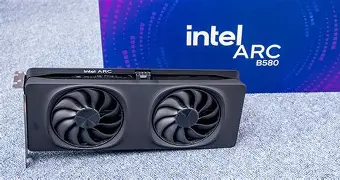
Don't Buy the Intel Arc B580 Until You Read This Full Analysis
Introduction
The Intel Arc B580 is Intel's bid to capture more of the mainstream laptop GPU market: a mid-range discrete accelerator positioned for 1080p gaming, light content creation, and everyday GPU-accelerated workloads. For buyers who prioritize value and future-proof features like modern video codecs and upscaling technologies, the B580 may look attractive on paper. However, real-world laptop decisions are rarely driven by hardware names alone. This full analysis breaks down what the Arc B580 actually offers, how it compares to contemporary mobile GPUs from NVIDIA and AMD, where it shines, and where prospective buyers should exercise caution.
Detailed Product Review and Analysis
Architecture and Key Features
The Arc series builds on Intel's Xe microarchitecture with an emphasis on gaming (Xe-HPG lineage). The B580 brings forward several features that are relevant to modern laptop users:
- Hardware-accelerated AV1 encode/decode: AV1 support can benefit creators and streamers as streaming ecosystems and platforms increasingly adopt more efficient codecs.
- Hardware ray tracing: The architecture includes fixed-function ray tracing units which enable improved lighting and reflections in supported titles.
- XeSS upscaling: Intel’s answer to temporal upscaling (similar in intent to NVIDIA’s DLSS and AMD’s FSR), offering higher frame rates at lower internal resolutions.
- Modern API support: Compatibility with DirectX 12 Ultimate feature sets and Vulkan where implementations are matured.
These features position the B580 as a modern feature-set GPU, which is important for buyers who want hardware-level codec support and upscaling to extend gaming performance without sacrificing visual fidelity.
Performance in Real-World Use Cases
When evaluating the B580, consider the three common buyer archetypes: the 1080p gamer, the content creator on the go, and the productivity user who benefits from GPU acceleration.
1080p gaming: The B580 targets smooth gameplay at 1080p with medium-to-high settings in many esports and older AAA titles. For competitive titles that prioritize high frame rates (e.g., Counter-Strike, Valorant, Rocket League), it can provide comfortable headroom. For the latest AAA releases with demanding graphics, a buyer should expect to trade graphical fidelity or enable XeSS/upscaling to reach higher frame rates.
Content creation and streaming: The presence of AV1 hardware encoding is one of the B580's most practical advantages. For streamers who expect to offload video encoding from CPU to GPU, AV1 can deliver improved compression efficiency, which is beneficial for constrained upload bandwidths. For editors and creators working with 1080p and some 4K workflows, GPU-accelerated effects and timeline playback will be noticeably improved over integrated graphics, though heavy 4K color grading and high-bitrate exports still favor higher-tier mobile GPUs or desktop setups.
Productivity and GPU-accelerated apps: Productivity tools that utilize hardware acceleration—video conferencing, GPU-accelerated browsers, some machine learning inference tasks—will benefit from the B580. That said, large-scale ML training or professional 3D work remains outside the B580’s design goals; users in those areas should consider workstation-class GPUs.
Discover deals on Laptops & Computers — updated daily.
See Deals →Thermals, Power, and Laptop Design Impact
A discrete GPU in a laptop does not operate in isolation—its thermal and power envelope interacts with CPU, chassis design, and cooling. The B580 will appear in machines with a range of power limits; OEM implementations matter greatly. Expect the following practical considerations:
- Power limit variability: Some laptops may configure the B580 at lower power targets for thinner designs, resulting in lower sustained clocks and reduced real-world performance compared with thicker gaming chassis that allow higher sustained power.
- Thermal throttling risk: Thin-and-light laptops with small fans can cause the GPU and CPU to throttle under prolonged loads (long gaming sessions, prolonged rendering), so sustained performance can vary widely between models that ship the same B580 chip.
- Battery life trade-offs: Disengaging the discrete GPU (or enabling dynamic GPU switching) can extend battery life for casual tasks. Buyers should check whether the laptop offers sensible hybrid modes, and how well the system switches between integrated and discrete graphics.
Driver Maturity and Software Ecosystem
Historically, Intel’s initial Arc driver releases had gaps compared with incumbent GPU vendors. Since launch, Intel invested significantly in driver improvements, game compatibility patches, and developer outreach. For buyers this translates into several practical points:
- Game compatibility: Popular titles generally run on Arc hardware, but edge cases exist where specific titles required driver updates for performance parity or to resolve rendering issues. Buyers focusing on a small set of niche or indie titles should verify compatibility.
- Software acceleration: Industry software vendors have been gradually adding Arc optimizations; however, the breadth of support is not yet universal. For example, certain plugins or GPU-accelerated filters in creative suites may perform best on GPUs with long-established vendor SDKs.
- Driver update cadence: Intel has committed to frequent updates. Buyers who value staying current with the latest driver improvements should verify the OEM’s driver distribution model (OEM-locked drivers vs. Intel’s generic drivers).
Value and Market Positioning
Price-performance matters most in the mid-range segment. The B580’s value proposition depends on the laptop’s overall package: display quality, CPU pairing, RAM, storage, thermal architecture, and pricing. If a laptop pairs a capable CPU, ample RAM, and a high-refresh 1080p panel with a B580 at a competitive price, it can be a compelling all-rounder for students, casual creators, and mainstream gamers. Conversely, if the OEM compromises thermals or pairs it with a low-quality display, that value proposition quickly erodes.
Pros & Cons
- Pros:
- Modern feature set: hardware AV1 encode/decode and ray tracing support.
- Support for XeSS upscaling to improve frame rates without drastic quality loss.
- Solid for 1080p gaming and light-to-moderate content creation workflows.
- Potentially better value in well-configured laptops versus higher-tier GPUs that cost significantly more.
- Cons:
- Performance depends strongly on OEM power limits and cooling; same chip can vary between designs.
- Driver maturity has improved but can still lag in edge-case game or software compatibility.
- Upscaling ecosystem (XeSS) has fewer titles natively integrated compared with competing upscalers.
- Not a replacement for higher-tier mobile GPUs for sustained high-fidelity 1440p/4K gaming or professional 3D workloads.
How the Intel Arc B580 Compares (At a Glance)
| Metric | Intel Arc B580 | NVIDIA RTX 4050 (mobile) | AMD Radeon RX 7600M / RDNA variant |
|---|---|---|---|
| Target segment | Mid-range mainstream gaming and creator laptops | Mid-range gaming-focused laptops | Mid-range gaming with strong rasterization focus |
| Typical 1080p gaming | Good at medium-high settings; benefits from XeSS | Strong at high settings; benefits from DLSS | Competitive raster performance; FSR supported for upscaling |
| Ray tracing | Supported; variable performance in RT-heavy titles | Supported; generally stronger RT performance per watt | Supported; improving but varies by title |
| Upscaling | XeSS (good quality when supported) | DLSS (widely supported, high-quality) | FSR (broad support, multiple quality modes) |
| Hardware codecs | AV1 encode/decode (notable advantage) | AV1 decode (encode limited or through software depending on generation) | AV1 decode on recent designs; encode support varies |
| Driver & software ecosystem | Improving; works well in many titles but check game-specific reports | Mature, frequent game-ready drivers | Mature; solid driver support for many titles |
| Power efficiency | Depends on OEM tuning; competitive in favorable designs | Typically efficient at this segment | Often competitive, varies by architecture generation |
| Typical VRAM (OEM dependent) | Configured in mid-range capacities (varies by model) | Commonly 6–8 GB in mid-range mobile SKUs | Commonly 6–8 GB in mid-range mobile SKUs |
Buying Guide: What to Check Before Choosing a Laptop with the Arc B580
1. Know the Intended Use
Buyers should be explicit about primary tasks: 1080p esports, AAA gaming, video editing, or daily productivity. The B580 is optimized for mainstream gaming and creative workflows at 1080p. If the primary use is professional 3D rendering, GPU-accelerated scientific workloads, or high-refresh 1440p gaming, consider higher-tier GPUs.
2. Review OEM Power and Cooling Configuration
Ask or research the laptop’s configured GPU power limit (if available in reviews) and how robust the cooling solution is. Laptops advertising the same GPU can vary considerably in sustained performance because thermal headroom and fan curves determine how long the GPU can maintain high clocks.
3. Check the Display and Refresh Rate
Pairing matters: a high-refresh 1080p panel (120Hz–165Hz) can extract more value from the B580 in competitive gaming scenarios, but only if the GPU and CPU combination can supply competitive frame rates. Conversely, a low-quality IPS panel will bottleneck the perceived experience even if the GPU is capable.
4. Evaluate Driver Update Policies
Some OEMs lock GPU drivers behind OEM-specific releases. Buyers who want the latest fixes and game patches should verify whether the laptop supports direct Intel driver updates or forces reliance on OEM-supplied drivers. A model that allows generic Intel drivers can receive fixes sooner in some cases.
Find top-rated Laptops & Computers products at great prices.
See Deals →5. Verify Feature Support for Your Software
Creative professionals should confirm that the apps they use benefit from Intel’s GPU acceleration paths. Look for official statements or benchmark tests from the software vendor that demonstrate Arc support for relevant features (hardware decode/encode, GPU-accelerated effects, offloading).
6. Memory, Storage, and CPU Pairing
The GPU is one part of a performance equation. Insufficient RAM, slow storage, or a weak CPU can create bottlenecks. For balanced performance, aim for at least 16 GB of RAM, an SSD with ample capacity and write performance, and a CPU that complements the GPU (mid-range or higher mobile CPU).
7. Specific Red Flags
- Very thin chassis with minimal cooling and high advertised clock speeds — these often throttle under sustained load.
- Minimal memory (8 GB) paired with a discrete GPU — memory pressure will reduce gaming and multitasking performance.
- Reports of persistent driver issues on the particular SKU — check multiple independent reviews and user forums for the model.
8. Practical Checklist Before Purchase
- Will this laptop run my most-used games or apps at an acceptable quality/frame rate?
- Does the laptop support XeSS, and are the games I play compatible?
- Is AV1 hardware encoding relevant to my streaming/workflow needs?
- Has the OEM posted performance thermal testing or do reviews show consistent sustained clocks?
- Are driver updates available freely from Intel, or does the OEM control distribution?
Conclusion
The Intel Arc B580 is a credible mid-range option for buyers who want modern codec support, hardware ray tracing, and the potential for strong 1080p gaming when paired with a well-designed laptop. Its practical value depends heavily on OEM implementation: power limits, cooling, display quality, and driver distribution policies all materially affect real-world experience.
For mainstream gamers, students, and content creators who prioritize a capable 1080p experience with future-facing features like AV1 and temporal upscaling, a well-configured B580 laptop can be a sensible choice. For those who demand the highest ray tracing performance, sustained 1440p/4K gaming, or guaranteed compatibility with every professional plugin, higher-tier or workstation-class GPUs remain the safer option.
In short, don’t buy a laptop for the Intel Arc B580 name alone—evaluate the whole system, confirm driver and software support for the buyer’s specific use cases, and compare the real-world thermal and power behavior of competing models. With the right laptop configuration, the B580 can deliver a compelling balance of features and price; in the wrong chassis, buyers will notice the trade-offs quickly.