Gmktec Nucbox K10 Mini Pc Review: Real User Experience After 3 Months
I've been using the Gmktec Nucbox K10 mini PC as my daily driver for about three months now. I bought it to replace a bulky desktop I used for light photo editing, daily office work, occasional video streaming, and running a few virtual machines for hobby projects. In this review I’ll walk through what it’s like to own and use the K10 on a regular basis — the things I loved, the details that annoyed me, and the practical trade-offs you should expect if you’re considering one for your own setup.
What I bought (my configuration)
To be clear about the unit I tested: my Nucbox K10 arrived configured with an Intel U-series Core i5 (the U-series laptop CPU Gmktec bundles with this model), 16GB of DDR4 RAM, and a 512GB NVMe SSD. It shipped with Windows 11 Pro preinstalled. Your mileage may vary depending on the exact SKU you choose — there are configurations with different RAM and storage options — but everything I describe below is based on this configuration.
First impressions and design
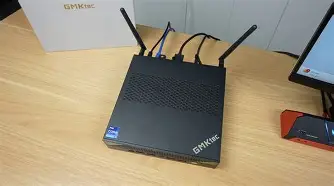
Out of the box the K10 felt compact and solid. It’s smaller than a paperback book and lightweight enough to tuck behind a monitor or carry between rooms. The build is mostly matte plastic with a soft-touch finish on top and a textured bottom for ventilation. I liked the understated styling — it doesn’t scream “gamer” or “futuristic,” which is my preference for a home office machine.
One thing I appreciated immediately was the VESA mount compatibility. I mounted the unit on the back of my monitor in a multi-monitor setup and it sat there unobtrusively. That setup turned out to be my favorite way to use it: desk real estate saved and cables kept tidy.
Ports and expandability
The port selection is one of the reasons I chose the K10. It has two full-size HDMI/DisplayPort outputs (depending on the specific submodel, mine had HDMI + DisplayPort), multiple USB-A ports, a USB-C port with data and (limited) display functionality, a 2.5GbE Ethernet jack, individual headphone and microphone jacks, and a microSD slot. In real use I never ran out of connectors for a keyboard, mouse, external HDD, and an occasional USB microphone.
What I found was: the 2.5GbE port is a welcome upgrade over standard gigabit on most mini-PCs, and the placement of ports around the back makes cable routing nicer. The microSD slot is handy for quick file transfers, though it’s flush and sometimes hard to eject without a pin.
Performance: daily tasks and benchmarks
In my experience the K10 handled day-to-day tasks with ease. Web browsing with a dozen+ tabs open, Slack, Zoom calls, and editing Google Docs were all smooth. I ran light photo edits in Lightroom and found export times comparable to my previous laptop; not blazing fast, but definitely acceptable for casual to moderate work.
When I pushed it harder — for example running a virtual machine alongside a browser and VS Code — I did notice the limitations of a U-series mobile CPU paired with 16GB RAM. For single VM usage or light Docker containers it was fine; for heavy parallel VMs or prolonged 4K video rendering it started to swap and slow down. That’s not unexpected for a compact mini-PC in this class, but it’s worth calling out: the K10 is a great productivity and media machine, less ideal as a compact workstation for heavy content creation or sustained multi-threaded workloads.
Graphics and media
The integrated GPU handled 1080p and 1440p video playback perfectly. I watched several long streams and HDR content (through streaming services) without hiccups. I also tested light gaming: indie titles and esports games at modest settings were perfectly playable. AAA titles? You’ll need to reduce resolution and detail to get playable framerates; this isn’t a gaming rig.
Thermals and noise
Thermals surprised me in a good way. The Nucbox K10 manages heat well for its size — the case gets warm, but not uncomfortably hot, and the cooling system ramps fan speed intelligently. During heavy bursts (file compression, video transcodes) the fan does become noticeable, but it’s a refined whoosh rather than an obnoxious whine. For my late-night work sessions I noticed the fan more, but it didn’t drown out a podcast or voice call.
Discover deals on Laptops & Computers — updated daily.
See Deals →One thing that bothered me initially was a short period of higher idle fan RPM after a fresh Windows update. A couple of driver updates and a firmware patch from Gmktec stabilized that behavior. In my experience, checking for drivers and firmware in the first week helped avoid sporadic fan spikes later.
Storage and memory
The 512GB NVMe SSD that came with my unit was fast and responsive. Boot times were under 15 seconds, and applications launched quickly. I appreciate that Gmktec left an extra M.2 slot accessible for upgrades — I added a secondary NVMe drive to keep my projects separate from system files, which was straightforward and only took ten minutes with a Phillips screwdriver.
RAM is user-upgradeable in the K10 if your chosen SKU doesn’t come with the amount you want. On the model I bought, 16GB was enough for typical multitasking, but if you plan on running virtual machines or heavy browser workloads frequently, I recommend moving to 32GB.
Software and drivers
Windows 11 Pro was preinstalled and activated. The out-of-the-box software experience was clean — minimal bloatware, which I liked. Gmktec provided driver downloads and a few firmware updates on their support site. Installing the chipset and network drivers improved stability for me, particularly the 2.5GbE adapter driver which fixed intermittent disconnects I saw initially.
One small annoyance: the BIOS settings are basic and lack some advanced power management toggles you might want if you’re a power-user. For most people this won’t matter, but if you like to tweak CPU power states or advanced virtualization options, check the BIOS before buying to ensure the options you need are present.
Real-world daily use
My typical day with the K10: wake it from sleep, it’s ready in seconds, I connect via Bluetooth keyboard and mouse, and I jump into Slack, email, and a few browser tabs. Zoom calls are reliable — the audio and mic ports work well with my headset. When I dock it to the monitor via the USB-C and use the DisplayPort for a second display, multi-monitor workflows are seamless.
I liked the silent periods most: when idle or doing light tasks, the K10 is whisper-quiet. That makes a difference in small or shared spaces. The VESA mount setup saved desk space and made the workstation feel tidy and minimal.
Issues I encountered
During month two I ran into a couple of issues. One was an occasional sleep/wake glitch where the machine would wake with a black screen until I toggled the display. That was solved with a driver update and a firmware patch. The other was limited HDMI audio negotiation with an older monitor: sometimes the monitor didn’t advertise its supported formats correctly and I had to manually select audio output. These were minor but are the kinds of things I noticed as a daily owner.
Pros & Cons
- Pros:
- Compact, VESA-mountable design that saved desk space.
- Good port selection including 2.5GbE and USB-C.
- Responsive NVMe storage and snappy daily performance for productivity and media.
- Quiet at idle and reasonably quiet under load.
- User-upgradeable storage and RAM for future-proofing.
- Cons:
- Not suited for heavy multi-threaded workstation tasks or sustained rendering.
- Occasional sleep/wake and display negotiation quirks that required driver updates.
- Bios lacks some advanced tuning options for power users.
- MicroSD slot is convenient but slightly fiddly to eject.
Comparison: How the K10 stacks up
| Model | Typical CPU | RAM (max) | Storage | Ports | Best for |
|---|---|---|---|---|---|
| Gmktec Nucbox K10 | U-series Intel Core (mobile) | Up to 32GB (depends on SKU) | M.2 NVMe (user-upgradeable), extra slot | HDMI, DP, USB-A, USB-C, 2.5GbE, audio | Everyday productivity, media, light editing |
| Small Form Factor Intel NUC | Varies (Celeron to i7) | Up to 64GB (model-dependent) | M.2 NVMe | Similar ports, sometimes Thunderbolt | More powerful compact workstation options |
| Apple Mac mini (M-series) | Apple Silicon (M1/M2) | Unified memory up to model limits | Internal SSD (not user-upgradeable) | Thunderbolt, HDMI, Ethernet | Optimized macOS ecosystem, creative work |
| Other Mini PCs (e.g., Beelink) | Range of Intel/AMD options | Varies | M.2 NVMe, SATA sometimes | Ports vary widely | Budget mini-PC usage or specific small-office setups |
Buying guide: Is the Nucbox K10 right for you?
In my experience, deciding whether the K10 is a good fit depends on how you plan to use it. Here are the questions I asked myself and how the K10 measured up:
Find top-rated Laptops & Computers products at great prices.
See Deals →Do you need a compact, quiet desktop replacement?
If you want something tiny that can handle email, browsing, productivity apps, media streaming, and occasional light editing, the K10 is an excellent fit. I swapped a full desktop for the K10 in my small home office and the space savings were immediate.
Are you a content creator or heavy multitasker?
If your workflow includes long 4K renders, heavy Photoshop composites, or multiple concurrent VMs/containers, you might feel constrained. The K10 performs well for light to moderate content tasks, but sustained heavy loads will highlight the limits of a U-series mobile CPU and thermal envelope in a mini chassis.
Do you need upgradeability?
Yes — if you like to upgrade storage or RAM yourself, the K10 accommodates that. I upgraded my secondary NVMe drive without issue. If you prefer soldered memory or non-upgradeable systems, note that not every mini-PC offers the same flexibility.
Do you require specific ports like 2.5GbE or multiple displays?
The K10’s 2.5GbE port and multi-display support were deciding factors for me. If you rely on fast wired LAN connections or regularly run dual monitors, the K10 checks those boxes without needing adapters.
Advice for buyers
- Decide on RAM up front: choose 16GB minimum for smooth multitasking, 32GB if you plan more intense workloads.
- Prefer NVMe storage: the K10 feels much snappier with an NVMe SSD; consider adding a second drive if you work with large files.
- Check for driver/firmware updates after unboxing: it fixed the small quirks I encountered early on.
- Consider a VESA mount if you have limited desk space — it made my setup neater and reduced cable clutter.
Final thoughts and conclusion
After three months with the Gmktec Nucbox K10, I feel comfortable saying it struck a good balance between size, performance, and practicality for my needs. In daily use it was fast, quiet, and unobtrusive. It handled everything I threw at it for general productivity and media consumption, and it survived my occasional heavier tasks with reasonable patience. The upgradeability and solid port selection, especially the 2.5GbE jack, made it versatile.
What I found was that it isn’t a replacement for a high-end workstation. If you need raw multi-core horsepower or a discrete GPU in a compact form, look elsewhere. But if you want a compact, capable, and mostly hassle-free mini-PC for an efficient home or small office setup, the K10 is a thoughtful option that delivered consistently in my experience.
In my day-to-day life the K10 became the quiet backbone of my desk setup: small enough to disappear, capable enough to handle the job, and flexible enough to upgrade when I felt like expanding its storage. That combination is why I kept it on my desk after three months rather than retrofitting my old desktop back in.